

The Role of Electric Valves for Water Treatment in Modern Aquaculture
- 2025-12-31 12:00:00
- admin
- NO COMMENTS
Real-World Aquaculture Example
Modern aquaculture operations, such as recirculating aquaculture systems (RAS) for high-value fish or shrimp, demand extremely tight control of water conditions. For instance, a Pacific Northwest salmon farm experienced an unexplained rise in water turbidity and oxygen demand. Engineers ultimately traced the issue to a single leaking valve in the purification loop: a worn seal on the recirculation feed valve allowed partially treated water to bypass the UV sterilizer, gradually elevating bacterial counts in the tanks. This failure chain — poor seal → internal leakage → reduced purification — illustrates the importance of valve integrity. As one industry guide warns, “Leaks will waste fluids, can be hazardous, and cost you money”. In this case, upgrading to modern electric valves with robust sealing and position feedback immediately restored proper flow control and water quality, preventing further contamination.

Electric Valve Technology in Water Purification
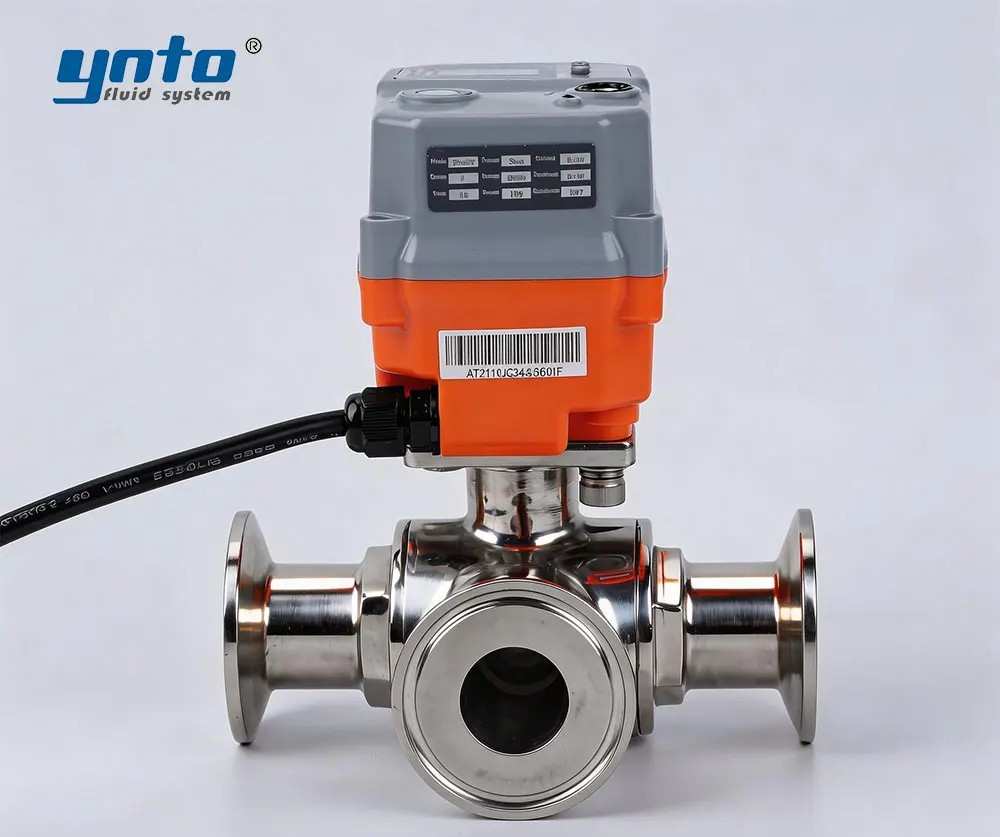
Electric valve technology is central to modern aquaculture water treatment. An electrical control valve combines a fluid-tight valve body and an electric actuator to regulate flow and pressure precisely. The valve body (often stainless steel) holds an internal plug, ball, or disk, and the actuator converts an electrical command into rotation or movement of that element. For example, an electric actuator mounts on a ball valve and drives it via a motor, positioning the spherical plug to open or close flow. In a butterfly valve, the actuator rotates a disk to throttle a wide pipe section. In all cases, the actuator’s precise motion ensures accurate flow control. For example, a high-performance electric ball valve can throttle saltwater precisely to maintain oxygen mixing rates. Electric actuators require no compressed air—“just plug in and forget,” as one engineer quips—and they allow very fine positioning (e.g. opening a valve 47% instead of 50%). Modern electric valve actuators often provide built-in diagnostics: one plant caught a failing valve because the actuator reported “unusual vibration” a week before it failed. These features enable predictive maintenance. In harsh saltwater or humid farm environments, actuators must be rugged (IP67-rated) to avoid corrosion – as an expert warns, “dusty mines or salty offshore rigs kill cheap actuators”.
Integration with Control Systems
Electric valves are integrated into a plant’s PLC/SCADA control system. Sensors continuously monitor water-quality parameters (dissolved oxygen, pH, ammonia, conductivity, etc.), and the controller adjusts valve positions in real time to maintain setpoints. For example, in a conductivity control loop, a PLC will open a control valve to bleed off concentrated water when salt levels rise above the setpoint. Other examples include using an oxygen sensor to modulate an aeration valve or an ORP sensor to dose chlorine through a valve. In each case the electric actuator must respond reliably to the digital command. Feedback from the actuator (such as position switches or current sensing) confirms that the valve has moved as intended, closing the loop. As one water-treatment guide notes, PLCs “monitor various system parameters” and then act via pumps and valves based on setpoints. When valves and actuators are properly chosen, the system can automatically balance water chemistry and flow rates. If valves are undersized or leaking, the control loops will drift. It is best practice to use well-characterized electric valves and actuators known for reliability and accuracy.


Materials and Construction
Aquaculture water can be chemically aggressive, so valve materials must resist corrosion and contamination. Typical fish-farm water may contain disinfectants (chlorine, ozone) and metabolic waste (ammonia, nitrates), and in marine systems high salt. Stainless steel alloys are the norm: Type 316L is widely used because its added molybdenum gives excellent resistance to chloride pitting and general corrosion. In fact, 316L’s low-carbon formulation is chosen for welded components to avoid post-weld corrosion. For the most demanding cases, super-duplex stainless steels (such as UNS S31803/2205) are employed. Duplex 2205 can offer roughly double the corrosion resistance of 316L, making it suitable for very salty or high-pressure aquaculture applications.
Internally, valve seats and seals use specially selected polymers. PTFE (Teflon) is common for seats because it offers universal chemical compatibility and extremely low friction, so it endures chlorinated or saline feed water without degradation. For dynamic seals (O-rings, gaskets, packing), FKM (Viton) elastomer is typical due to its excellent chemical and temperature resistance. Viton tolerates chlorine, ozone, and many solvents that would attack other rubbers. All components are typically certified to industry and sanitary standards (ASTM/ISO grades, FDA/NSF approvals) for water and food safety. By carefully specifying 316L or Duplex bodies with PTFE seats and FKM seals, engineers ensure that valves will withstand years of harsh service without corroding or leaking.

Safety, Standards, and Compliance
Electric valves in aquaculture must meet industry engineering standards. Valve bodies are normally flange-mounted per ASME B16.5/B16.47, with pressure/temperature ratings per ASME or API classes (e.g. ANSI 150/300). Many valves follow API or MSS specifications for their type and size, and are hydrostatically tested (API598 or ISO5208) to verify zero internal leakage. Actuators and positioners carry UL/CSA or ATEX (IECEx) certification as required. For example, a quarter-turn ball valve might meet API 608 for flanged valves, or a butterfly valve meet MSS-SP criteria. These standards ensure consistent dimensions, pressure ratings, and leak performance.
From a safety standpoint, fail-safe features are common. Many electric actuators include a spring-return mechanism that drives the valve to a safe position (fully open or closed) on power loss. For instance, if a system overpressure or fire alarm occurs, the actuator can default-close to isolate a section. Pressure relief or reducing valves are typically installed upstream of pumps or filters as mechanical backup to prevent spikes. Valves can also be interlocked through the PLC: a high-level or high-pressure sensor can command a valve to close or an alarm to trigger, preventing overflow or damage.
Environmental compliance further influences design. Aquaculture facilities often hold discharge permits (e.g. EPA NPDES) requiring treated effluent to meet strict limits on nitrogen, BOD, and pathogens. Valves help enforce these regulations by routing water into recirculation biofilters or waste treatment instead of into public waterways. Leak detection is part of that regime: for instance, flow meters or level switches can detect unexpected flows (e.g. a sump overflowing), prompting the system to shut valves or redirect flows. As one water-treatment guide notes, if undetected “even a small valve leak can lead to a substantial loss of water and chemicals”, so using tight, monitored valves is best practice. Proper design of piping and valves to contain leaks is not only good engineering — it’s regulatory best practice.

Conclusion
Electric actuated valves have become indispensable in modern aquaculture water treatment. By combining durable, corrosion-resistant materials (316L or duplex stainless bodies with PTFE seats and FKM seals) with strict adherence to ANSI/API/ISO standards, these valves deliver reliable long-term performance. Integrated into PLC-based control loops, they allow the system to automatically balance flow, pressure, and chemical dosing, avoiding the hidden leaks and inefficiencies of older manual systems. As one automation specialist succinctly observes, electric valve actuators “aren’t optional anymore—they’re essential”. In short, investing in the right electric valves and control architecture protects fish health, meets environmental regulations, and keeps the farm operating efficiently.

.png?imageMogr2/format/webp)
- 2026-09-30 08:25:23
- 2026-09-28 10:28:43
- 2026-09-21 15:23:44